by Walter – December 29, 2025
This is dedicated to EVERYONE who Stepped In When Life Fell Apart
A quiet tribute to the hands, hearts, and small miracles that carried us through.
Chapter 1 – The Evening Walks That Stopped.
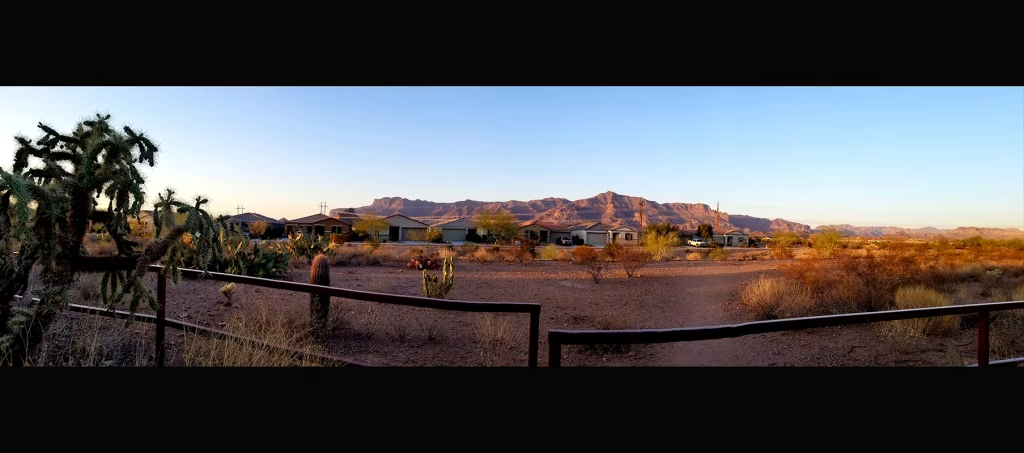
For almost twenty years Karen and I ended many days the same quiet way: a slow walk around the neighborhood. Now living in Arizona, as the sun dropped behind the Superstition Mountains, we went on our way. Nothing fancy. Just us, the still warm air, and usually a little conversation about this or that. Seven weeks ago those walks simply… stopped. What started as nagging back pain turned vicious. One evening she couldn’t make it past the mailbox.
The next morning she could barely get out of bed, or sit on a chair. Our primary doctor had just retired. Perfect timing, right? So getting an MRI took far too long. When the images finally came back, the words hit like a fist: T10 vertebral fracture, 30% compression. The surgeon we found didn’t waste words. “Check in to the hospital immediately. We need to stabilize this now or paralysis is on the table.” He also said there was a growth causing the fracture. Possibly cancer. After getting her belongings, against the surgeon’s advice, we headed immediately to the hospital and checked her in. The next days, my sleep would be going from four hours to nothing for days.
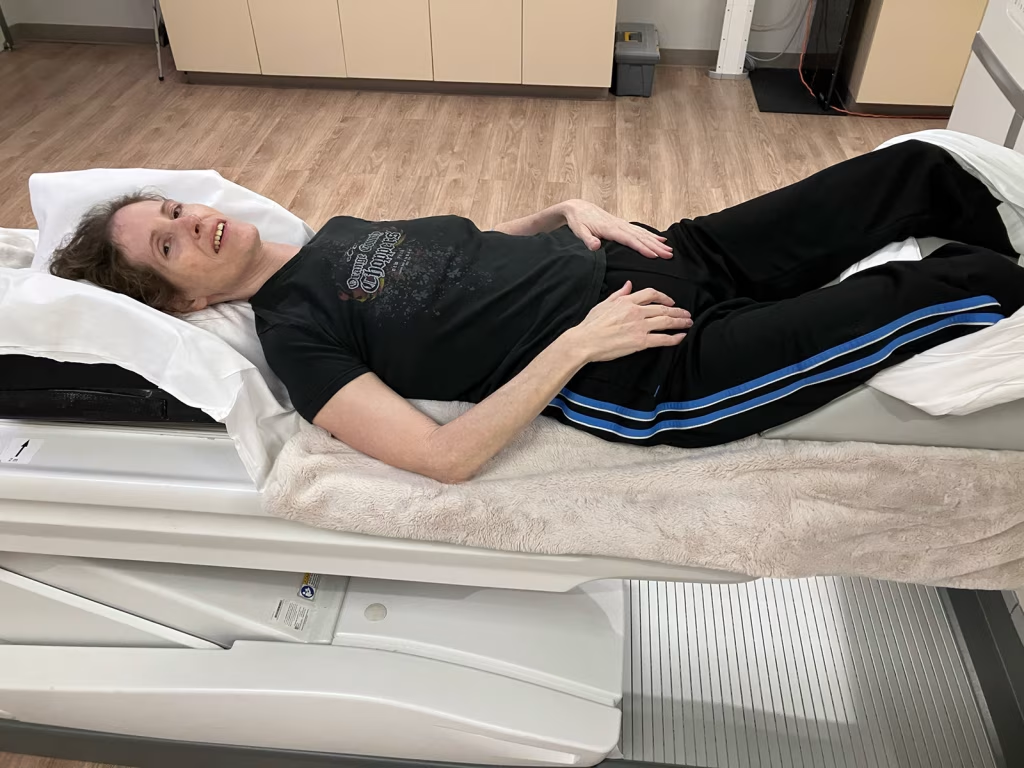
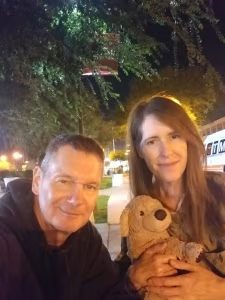
The photo was taken late in the evening, during one of those small but necessary escapes from the hospital’s fluorescent glow. I had wheeled Karen outside for a breath of fresh air, hoping the night breeze might offer her even a moment of relief. The sky was settling into that deep Arizona blue, the kind that feels both quiet and endless.
From across the grounds, the sound of a folk‑and‑country concert drifted toward us, soft guitar, a distant voice, the kind of music that feels like home even when you’re far from it. We sat there for a while, letting the night wrap around us. The fresh air, the music, the stillness… it all blended into a small pocket of peace in an otherwise heavy day.
For a few minutes, it felt like the world slowed down just enough for us to breathe.
Chapter 2 – Titanium, Biopsy, and the First Long Night
November 8th, 2025 – 12:30 p.m.
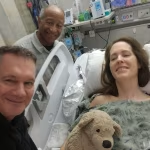
I knew Karen needed more than medical care that day; she needed emotional support, something familiar and grounding before heading into Pre‑Op. So I brought in a surprise. My friend and our longtime favorite doctor, now retired, Warren Tripp. He had been such a steady presence throughout her earlier battles, and just seeing him has always brought her comfort.
When Warren walked into the room, Karen froze for a moment, and then the tears came. She cried her eyes out, overwhelmed by the kindness of his visit and the memories of everything he had guided her through. She held his hand and thanked him from the bottom of her heart for being there, especially on a day that felt so heavy. It was one of those rare, powerful moments where gratitude, relief, and love all meet in the same breath.
2:05 p.m.
Karen was moved into the Operating Room, and Warren and I found seats in the family waiting area. We ended up having a wonderful, wandering conversation. Life stories, old mishaps, injuries, previous surgeries. The kind of talk that fills the space when you’re trying not to think too hard about what’s happening behind closed doors.
2:44 p.m.
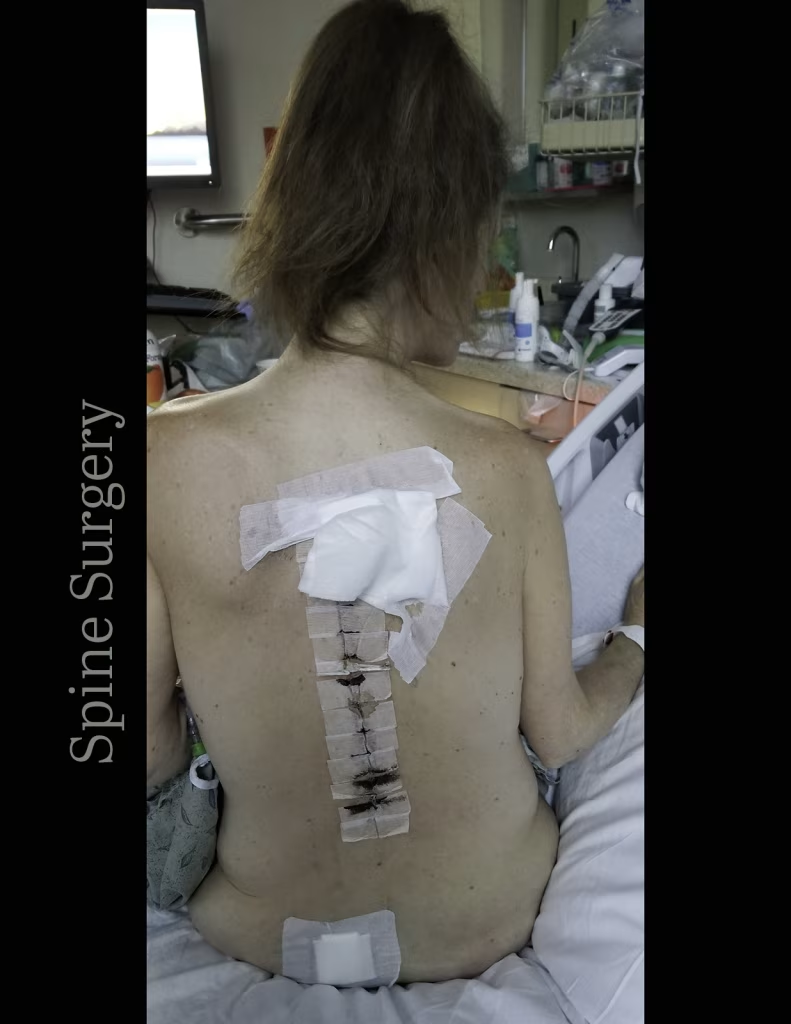
Major spinal surgery underway: rods, fusions, bone grafts, the full reconstruction. While the surgeon was in there, he also took a biopsy of the mass.
5:32 p.m.
Karen was moved into the recovery room. Around then, Warren realized he’d forgotten his eyedrops,. He’d just had eye surgery himself. He stayed as long as he possibly could, but by 7:30 p.m. he had to take care of his drying eyes.
7:45 p.m.
Karen was brought back to her room. She woke up in more pain than I’ve ever seen her endure. Watching her suffer was worse than any pain I’ve ever carried myself, and I’ve carried plenty. And yet, the next morning, she did physical therapy anyway. She stood. Took sideways steps. All with a brace holding her together. She looked at me through tears and said, “I did it.”
Chapter 3 – Small Victories & Big Fears
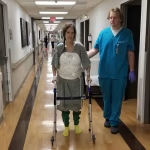
First steps with the walker. Catheter out. And, after days of misery, finally pooping. (Yes, those become real victories here, the kind you celebrate without shame.) I drove home for four hours of sleep, the first real rest I’d had in three days, then came back carrying a bowl of mashed potatoes because that’s what she was craving.
We even managed a laugh. I told her she was still beating me at solving the Riemann Hypothesis, and she gave me that perfectly confused look I was fishing for. A tiny win in a place where wins are rare and precious.
Then the pathology reports started arriving in fragments. First: solitary plasmacytoma. Then, after the bone marrow biopsy, the words shifted to multiple myeloma. The stage changed. The scope widened. It had spread into the marrow and the blood. Suddenly the conversations turned to immunotherapy or chemotherapy, stem‑cell transplant, long‑term maintenance.
A whole new battlefield.
Her blood pressure crashed to 76/62. Heart struggling. Body struggling. And the two of us doing everything we could to keep hope from slipping through our fingers. We cried together, than started to consider the options.
Chapter 4 – The Night I Almost Lost My Temper (and the Hospital That Almost Lost Its Soul)
November 20, 2025 — Karen Gets Discharged
We finally brought Karen home. On the way, we stopped to pick up her medications, and that’s when the car’s low tire‑pressure warning lit up. Given everything she’d just been through, I wasn’t willing to gamble with a blowout on the freeway. We headed to Discount Tire in Mesa, where they usually check it quickly and for free.
But this time, twenty people were already in line. I waved over the attendant and, as kindly as I could, asked if we could bypass the wait. Karen was sitting beside me in her hospital gown, exhausted, pale, and fragile after major spinal surgery and a fresh cancer diagnosis. I explained that I needed to get her home as soon as possible.
His answer:
“I’m sorry, but these people have already waited 20 minutes. I can’t do that for you.”
Why mention this? Because it’s a snapshot of the world we live in, where empathy is becoming rare enough to feel like a luxury. And that is why you, the people reading this, matter so much. You remind us that humanity isn’t gone, even when moments like this make it feel that way.
I left and drove home.
Once there, I unpacked Karen’s things and the groceries, helped her to the bathroom, changed her clothes, and got her settled into bed. She asked for pea soup, so I made it. Then I gave her the prescribed pain medication and a low‑blood‑pressure pill, exactly as outlined in her discharge instructions.
Later, she felt a sharp stinging under her right chest. Her heart rate was elevated at 115. I called my friend Warren, Karen’s former doctor and a steady voice in all of this. After speaking with her, he recommended calling paramedics.
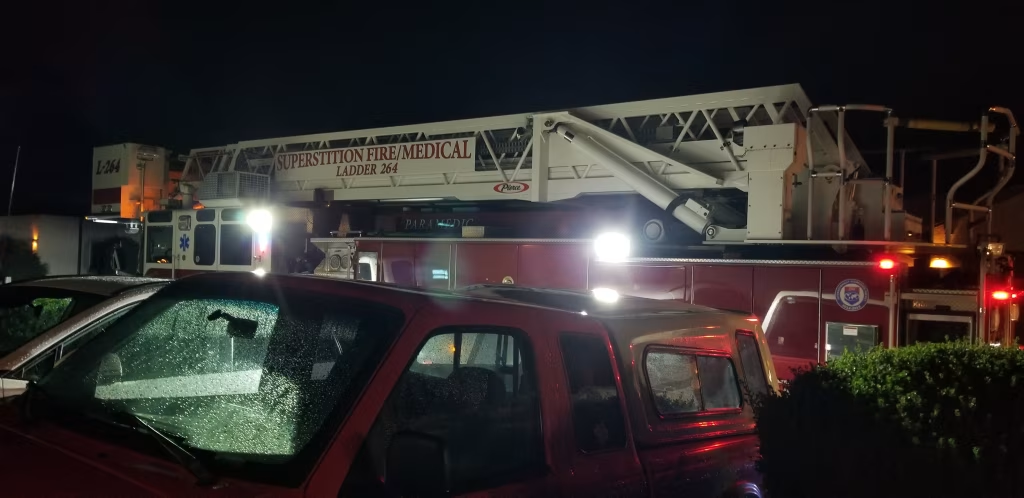
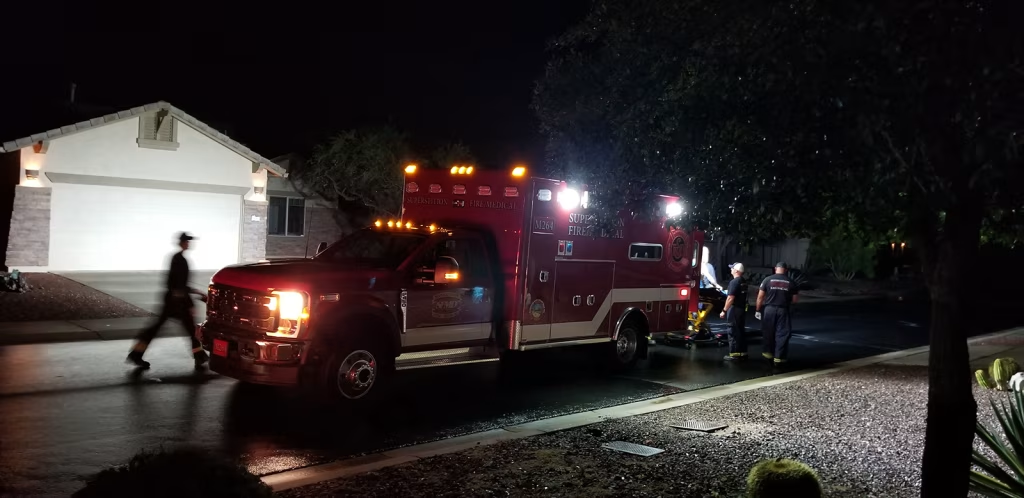
They arrived within ten minutes and were outstanding. Seven true professionals. They suggested taking her to a nearby HonorHealth hospital, part of the same network but much closer to home.
The Hard Part
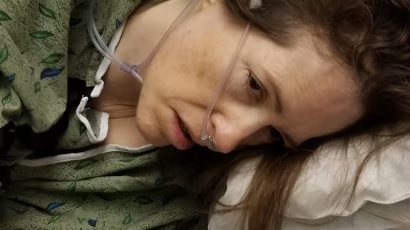
The paramedics told me not to rush; an hour’s delay would be fine. But when I arrived, the only thing completed was a urine sample. Dr. Luis was in the room and seemed competent, but an emergency heart attack case had pulled the team away. Understandable.
A nurse attempted to place an IV for opioid medication, but Karen’s arms were too swollen. After that… nothing. We waited two more hours. Karen was in pain and spiraling into serious anxiety. I repeatedly asked – calmly, respectfully – if someone could at least bring her oral medication.
The answer was always the same:
“A nurse will be with you shortly.”
Nearly three hours passed. Karen finally said she wanted to leave. I went to get a wheelchair. Outside, a storm had rolled in, ice-cold rain pouring down. I pulled the car to the emergency entrance and told security I’d be parked for fifteen minutes to pick up a patient.
Back in the room, the doctor, who by now struck me as cold and dismissive, looked at me and said,
“She is staying.”
I replied,
“No, she is not.”
He said he had ordered Valium and Dilaudid. I said, “Okay.” But fifteen minutes later, still nothing. Staff were laughing in the hallway. I called a nurse in and asked again. She responded, in a tone dripping with self‑righteousness,
“We had an emergency that took precedence.”
I said, more firmly,
“So while you’re standing here on your apology tour, did you at least bring her meds?”
She said no, and walked out.
![]()
God help us if this is what people face in a medical emergency.
I took Karen and wheeled her out in the icy cold rain and strong winds. By the time we got home, the rain was still coming down in sheets. Karen was wearing only her hospital gown and was freezing. I put on her shoes and moved her as quickly and safely as I could into the house, soaked, shivering, and exhausted. It was heartbreaking.
Once inside, I gave her a long, hot shower, her first in fourteen days. I washed her hair and calmed her down. It helped more than anything that hospital did.
Later, she told me what the doctor said while I was out of the room:
“You’ll be back anyway, and I’ll still be here, because I’m the only one who can help you.”
There is a God, and He was watching over me, because if I had heard that in person, I would be writing this from jail. That was one step too far. Anyone who knows me well, and knows my professional background, understands I’m not exaggerating.
I know I have to keep my calm. But just like the tire‑shop story, it is incredibly hard to watch how desensitized and devoid of empathy some people have become.
I’ve since filed a formal complaint with the charge nurse at the urologist’s office, and more importantly, I filed a detailed complaint and spoke at length with the medical director who oversees all HonorHealth physicians. This kind of mistreatment cannot go unchallenged.
Chapter 5 – When It Rains, It Pours (Trucks, Backs, and Bank Accounts)
Broken truck. Sheared rear leaf springs off the frame. On a car we restored and just paid a small fortune to get back running. Next, my own back finally giving out after weeks of lifting, bending, carrying – to the emergency room, steroid shot, Oxycodone, and an MRI I keep postponing because I can’t leave her alone that long. Today, I still have excruciating pain. Bending is a no-no, even tying shoes becomes torment. But no time to attend.
We calculated. Hospital bed rental, caregiver help (because of Karen’s extreme chemical sensitivity from this disease, no perfume, no scented detergent, nothing), medications, travel to appointments, lost work time… The number was brutal. Then friends, neighbors, strangers started stepping in. Donations. Meals. Prayers. Blessings. A recliner chair from Michelle. An angel necklace from Brigitte in Bavaria. Donations by Jan, a wonderful lady we’ve met in the Clubhouse, who teaches Tai-Chi.
Michelle flew in from Washington State and stayed for five full days, stepping straight into the chaos with calm, capable hands. Her presence was more than help, it was relief in its purest form. Someone to share the load, to steady the moments when exhaustion was winning, to remind us that we weren’t doing this alone.
Meanwhile, Kent and Dawn quietly handled the yard work so the HOA wouldn’t notice how far behind I’d fallen. They didn’t ask for thanks or recognition, they just showed up and took care of it. When life is falling apart inside your home, having someone tend to the outside world feels like a small miracle.
Alex and Jery came over too, turning the kitchen into a little workshop of care. They chopped, blended, and prepared fresh juices for Karen, filling the house with the sound of people who love you enough to roll up their sleeves and do something tangible.
We lowered the fundraising goal to just under $40,000. Still a mountain. Still intimidating every time I look at it. But we’re standing on this side of it, upright, breathing, moving forward, because so many caring people have stepped in, lifted us up, and refused to let us face this climb alone.
And while all this help on its own is already deeply appreciated, there’s another layer to it, one that makes their kindness even more extraordinary. Because of Karen’s chemical sensitivity, a side effect of this disease, she can’t tolerate any chemical smells. Tide detergent, perfume, scented lotions, fabric softeners, basically anything with a fragrance can trigger severe reactions. It turns even simple visits into logistical puzzles.
Alex and Jery didn’t just show up; they washed all their clothes beforehand and even asked what body wash they should use so they wouldn’t bring any scent into the house. Michelle went a step further and bought entirely new clothing just to make sure she wouldn’t cause Karen discomfort.
This goes far beyond help. This is love expressed through awareness, sacrifice, and thoughtful action. It’s the kind of care you can’t fake, the kind that tells you, without a single speech or grand gesture, that people truly see you, truly care, and are willing to adjust their own lives to ease your burden. There are so many more people who have helped. If I have not mentioned you, please rest assured, I have not forgotten about your kindness.
Chapter 6 – PET Scan & The First Real Breath.
On December 22, we finally had the PET/CT scan done, and a few days later the results came in. I opened them with the kind of breath you don’t realize you’ve been holding for weeks. And then, relief. Real, tangible relief.
Almost the entire body: quiet.
No lighting up.
No spread to organs.
No new lesions.
After everything we’d been bracing for, the report read like a whispered mercy.
There were only two findings:
- A large but low‑activity thyroid mass, almost certainly benign, the kind of thing that shows up on scans all the time and rarely means trouble.
- One active spot at T10, the fracture site we already knew about, the same place that had caused her so much pain. The cancer is in the bone marrow. That’s the concerning part.
The Silver Lining
Karen is classified as R2‑ISS Stage III – a serious stage, but not the most aggressive. And the good news is that outcomes for this stage have improved significantly with newer therapies like the one she’s starting. We’re stepping into this phase with determination, knowledge, and hope.
But we caught it before it ran wild.
That sentence feels like grace, like someone reached out and steadied the wheel just before the cliff’s edge.
Chapter 7 – December 23rd: Armor Up!
These past weeks have been a blur of fear, hope, and hard decisions, but now, at least, we know the path we’re walking.
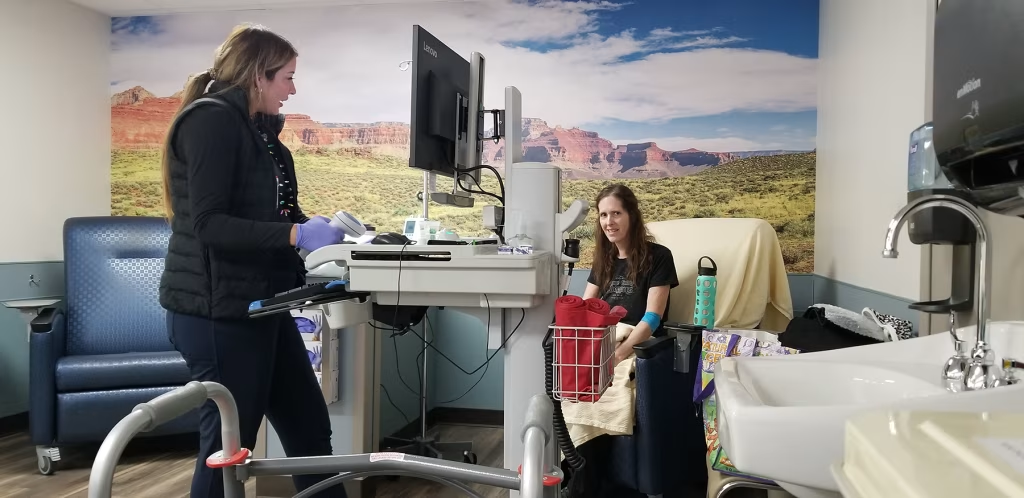
On December 23, Karen began PHASE 1 of her treatment, one of three phases designed to push Multiple Myeloma into remission. This first phase uses what’s called a Quadruplet Therapy, meaning four medications working together like a coordinated strike team. It’s one of the strongest and most effective modern approaches, hitting the cancer from several angles at once: exposing it, weakening it, overwhelming it, and helping the immune system clear it out.
It’s a powerful plan. And it gives us something we desperately needed, direction, structure, and a sense that we’re not just reacting anymore, but fighting back with purpose.
💛 What Each Medication Does – In Simple Terms
(my best interpretation, explained the way)
Karen’s treatment uses four different medicines, each with its own job. Together, they form a team – each one attacking the cancer in a different way, each one making the others stronger.
1. Daratumumab (Darzalex) – “The Spotlight”
Myeloma cells are masters of disguise. They hide from the immune system, slipping under the radar.
Daratumumab shines a bright spotlight on them so the body can finally see what it’s fighting. Once exposed, the immune system can recognize the cancer cells and clear them out.
It’s the difference between fighting in the dark and turning the lights on.
2. Velcade (Bortezomib) – “The Garbage‑Disposal Jammer”
Cancer cells survive by constantly cleaning up their own internal waste.
Velcade jams that system.
Toxic buildup starts inside the cancer cells, and they can’t handle it.
Healthy cells can.
Cancer cells die.
It’s a quiet, relentless kind of pressure, the kind that breaks the disease from the inside.
3. Revlimid (Lenalidomide) – “The Immune Booster”
Revlimid strengthens the immune system and keeps it alert.
It helps the body:
- Spot cancer cells
- Slow their growth
- Support the effects of the other medications
It’s like giving the immune system better tools, sharper instincts, and a renewed sense of purpose.
4. Dexamethasone – “The Multitasker”
This steroid plays several roles at once:
- Reduces inflammation
- Helps the other drugs work more effectively
- Prevents the immune system from overreacting
- Stresses the cancer cells, making them easier to kill
It’s not a cancer drug on its own, but it strengthens the entire strategy, like the glue that holds the team together.
🌄 Putting It All Together
These four medications work from different angles, spotlighting the cancer, weakening it, boosting the immune system, and supporting the whole process. The goal is simple and aggressive:
Hit the myeloma hard. Shrink it. Push it into remission. Keep it from coming back.
This is the beginning of a long road, but it’s a road with direction. A road with intention. And Karen is meeting it with the same courage she’s shown through every storm we’ve faced this year.
We’re not out of the woods. But for the first time in a long time, we can see a path through them.
Chapter 8 – The Horizon of Healing
We’ve marked a date on the calendar – not just as a milestone, but as a beacon pulling us forward through the fog of treatments, setbacks, and uncertainties. March 20, 2026, our 20th Anniversary. On paper it’s just a date, but for us it has become something far more powerful: a promise, a direction, a reason to keep moving.
In Man’s Search for Meaning, Viktor Frankl wrote about the profound human need for purpose, how having something to look forward to can become a lifeline in the darkest moments. He believed that when suffering has meaning, it becomes survivable. That philosophy has woven itself into our days more than ever. This anniversary isn’t just a celebration; it’s the meaning we’re holding onto. It’s the future we’re choosing to walk toward, step by step, infusion by infusion, breath by breath.
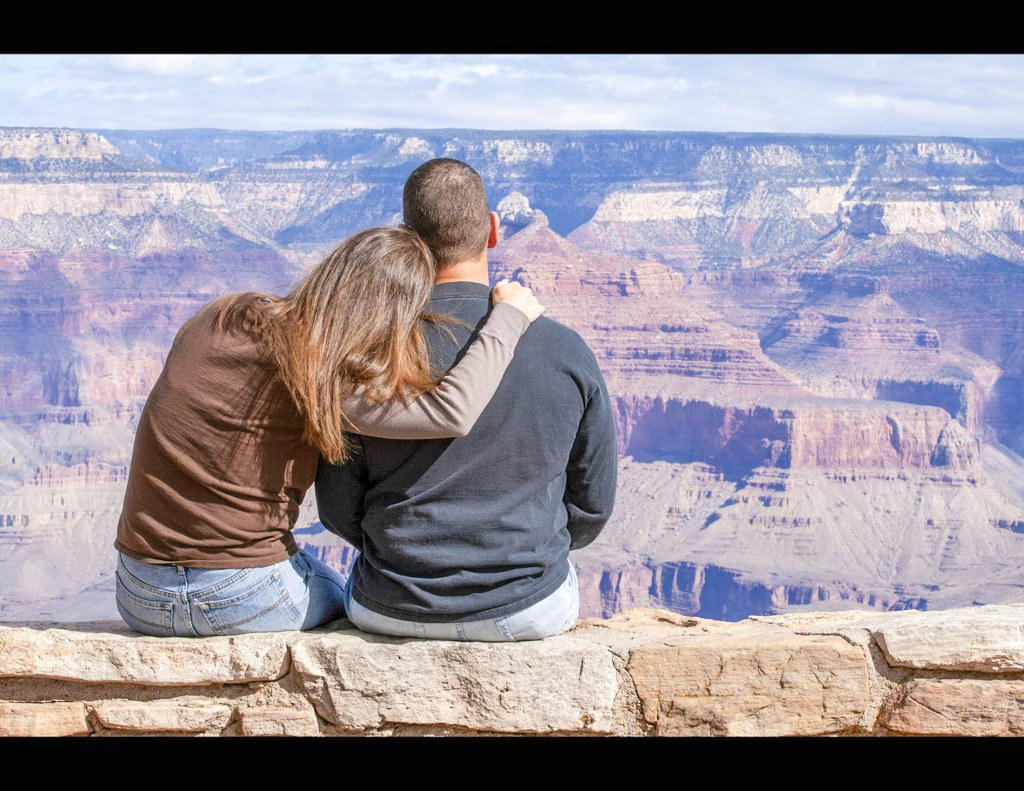
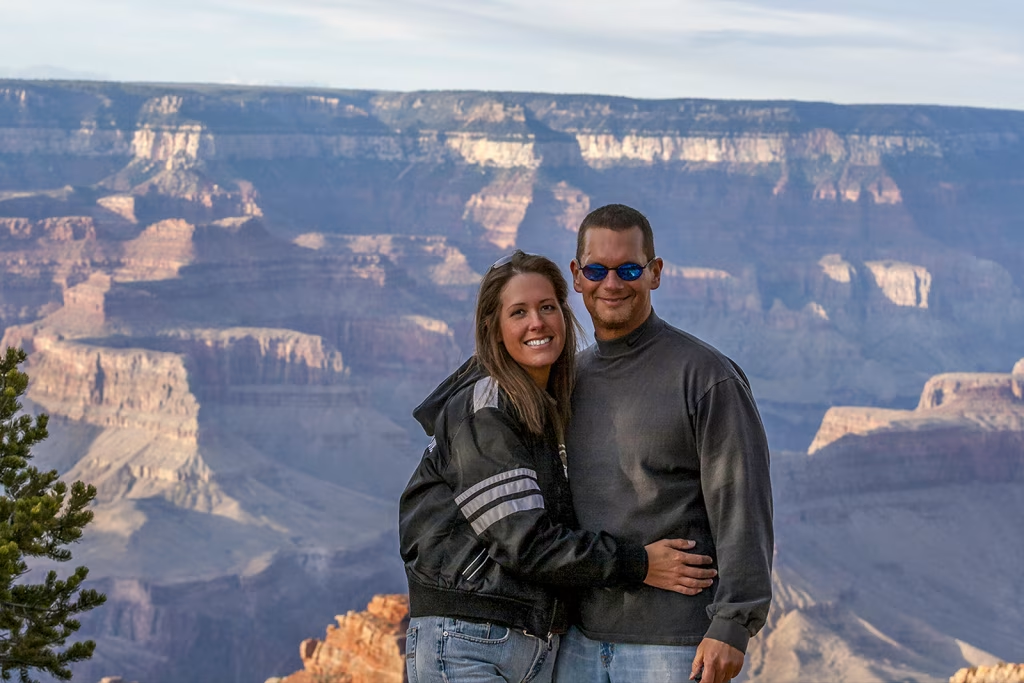
By then, we envision Karen standing tall again, free from the grip of pain, her body healing, her spirit unbroken. We picture her steady on her feet, not because the journey was easy, but because she refused to let it break her. And we’ll celebrate where it all began for us, and where we’ve returned so many times for renewal: the Grand Canyon.
Just like on our first anniversary, we’ll stand at the rim together, watching the sun paint those ancient layers in gold and crimson. The Grand Canyon has a way of reminding you how small your troubles are in the vastness of time and stone. It humbles you, steadies you, and somehow fills you back up again. That’s why we chose it. That’s why it matters.
This isn’t just a trip. It’s our Day of Healing – the culmination of every small step Karen takes between now and then. Every therapy session. Every quiet morning with herbal tea. Every walk with her walker that stretches a little farther than the one before. Every moment she chooses courage over despair. Every moment we choose hope over fear.
This goal keeps us grounded. It transforms the daily grind of recovery into a purposeful journey. It gives shape to the struggle and direction to the chaos. And every victory, no matter how small, brings us closer to that canyon edge, hand in hand, ready to breathe in the vastness again, ready to honor how far we’ve come, and ready to embrace whatever comes next.
Chapter 9 – The Sanctuary: Our True North
Amid the chaos of diagnoses, surgeries, sleepless nights, and the crushing weight of medical bills, one vision has remained steady—our guiding light through all of it: The Sanctuary.
Before Karen’s diagnosis, I was 95% finished with the presentation to fund this project. It felt like everything was finally aligning. And then life shifted beneath our feet. But if you know my story, you know I don’t believe in coincidences or random circumstances. There are battles we can see, and battles we can’t.
“For our struggle is not against flesh and blood, but against the rulers, against the authorities, against the powers of this dark world and against the spiritual forces of evil in the heavenly realms.” – Ephesians 6:12
This verse has echoed through my mind more than once this year.
Because of Karen’s need for intensive home care, at least until Phase 2, the stem‑cell replacement, expected between September and October 2026, The Sanctuary must be paused. Not abandoned. Not forgotten. Just paused.
It sets the project back by one year. My new target for funding is December 2026.
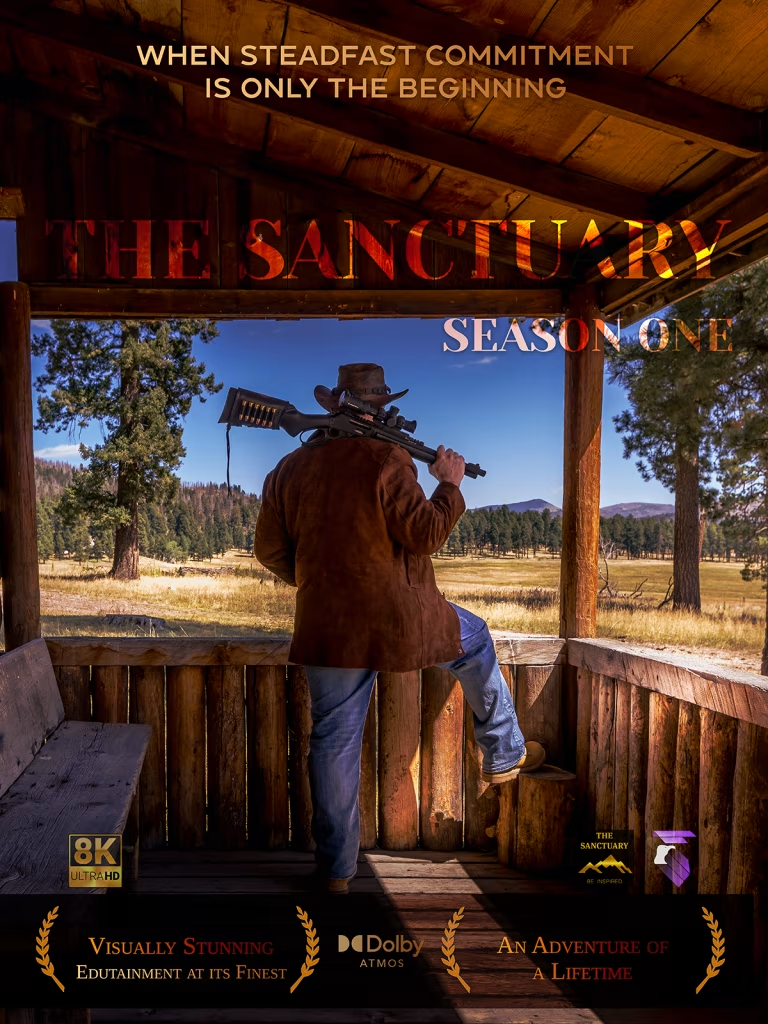
If you’re here because you want to understand what The Sanctuary truly is, you’re in the right place. This website will tell you everything. But let me say this clearly: The Sanctuary is far more than a film project or a homestead.
It is our path back to health.
Our return to a life rooted in nature’s strength, clean air, and self‑reliance.
A place where Karen can heal without the chemical sensitivities that turn every hospital stay into a battle.
The mountain property in New Mexico, with its log home, machine shop, gardens, and off‑grid systems, represents the environment we’ve needed for decades. A place where the land itself becomes part of the medicine. A place where silence, fresh air, and purpose can do what sterile rooms and fluorescent lights never could.
But The Sanctuary is not just for us.
It is a 12‑episode unscripted docu‑series, filmed over a full year, showing how ordinary people can build extraordinary independence. It blends timeless skills, gardening, carpentry, machining, mechanics, wilderness survival, self‑defense, emergency medicine, off‑grid living, with modern innovations like AI‑optimized systems for energy, water, agriculture, and security.
What makes this series different is its honesty. It will be filmed in reflective mode, meaning the crew becomes part of the story. Karen’s fight, her surgeries, her immunotherapy, her 20% life‑force days, her stubborn refusal to give up on our shared dream, will be woven throughout the narrative.
Viewers will see, in real time, that the same principles we teach on screen – resilience, self‑care, independence, are the very principles carrying her through the hardest battle of her life.
Every episode will carry that raw, unfiltered truth:
When the going gets brutal, you don’t quit. You adapt. You build. You keep moving forward, one small victory at a time.
For millions of people who feel trapped by systems, by institutions, by a world that often seems designed to keep us fragile. Karen’s journey will stand as a testament. She will show that the courage it takes to plant a garden, forge a tool, or fortify a home is the same courage it takes to face a diagnosis head‑on and refuse to let it define you.
The Sanctuary is our beacon of renewal, yes, but it is also a gift we want to give to everyone who watches. A reminder that freedom, health, and hope are not handed to us. They are built, day by day, by hands that refuse to stop working and hearts that refuse to stop dreaming.
Epilogue (for now) – The Sanctuary Still Waits.
We live in a world full of doubters and naysayers, people who can’t see past the immediate, the practical, the safe. And honestly, I sometimes wonder how many still believe they’re in control of anything at all. Life has a way of reminding us that control is an illusion. But even in the middle of all this uncertainty, we’ve always held onto something bigger.
We have a mountain.
I purchased a slice of heaven many years ago. A dream we’ve carried for years.
A place we always said we’d grow old together, make films that matter, and one distant day scatter our ashes. Not in sorrow, but in peace.
Right now, The Sanctuary feels far away. Some days, impossibly far. But the mountain hasn’t moved. It’s still there, waiting. And every time Karen squeezes my hand, every time a stranger joins our group or makes a donation, every time a neighbor drops off soup or a friend sends a message at exactly the right moment, the distance shrinks just a little more.
We’re not cured. We’re not even close to remission yet. This is going to be a long year and a hard battle. But we’re in the fight. Together. Held up by more love than I ever knew existed. And we’re not going anywhere without each other.
Our fundraiser has become one of the tools helping us keep this journey alive. If you can, please share it with anyone who might want to help Karen:
https://www.givesendgo.com/forkaren
Thank you for walking this road with us. Truly.
With exhausted gratitude and stubborn, unshakable hope,
Walter
(for Karen—always for Karen)